Poker on 1win: hands, variants and table formats

Player-versus-player poker requires an understanding of hands, position and playing format. In this 1win guide, compare Hold’em, Omaha and Draw, understand cash games, tournaments and sit & go formats, and learn what to check in the lobby. Skill and study influence decisions but do not eliminate variance, commission or the possibility of losing money.
Read about Poker
1Win poker

Characteristics of poker on 1win

In player-versus-player poker, participants compete for a pot formed by the table’s bets. This format should be separated from casino games bearing the poker name that pit a player against house rules or a dealer. Before choosing a room, identify the variant, format and commission structure.

Decisions, position and interpreting actions affect performance, but cards remain random. Skill does not guarantee profit in a hand or session, and commission must be included when calculating results. The table summarises points to check in the lobby without assuming an identical offering in every market.

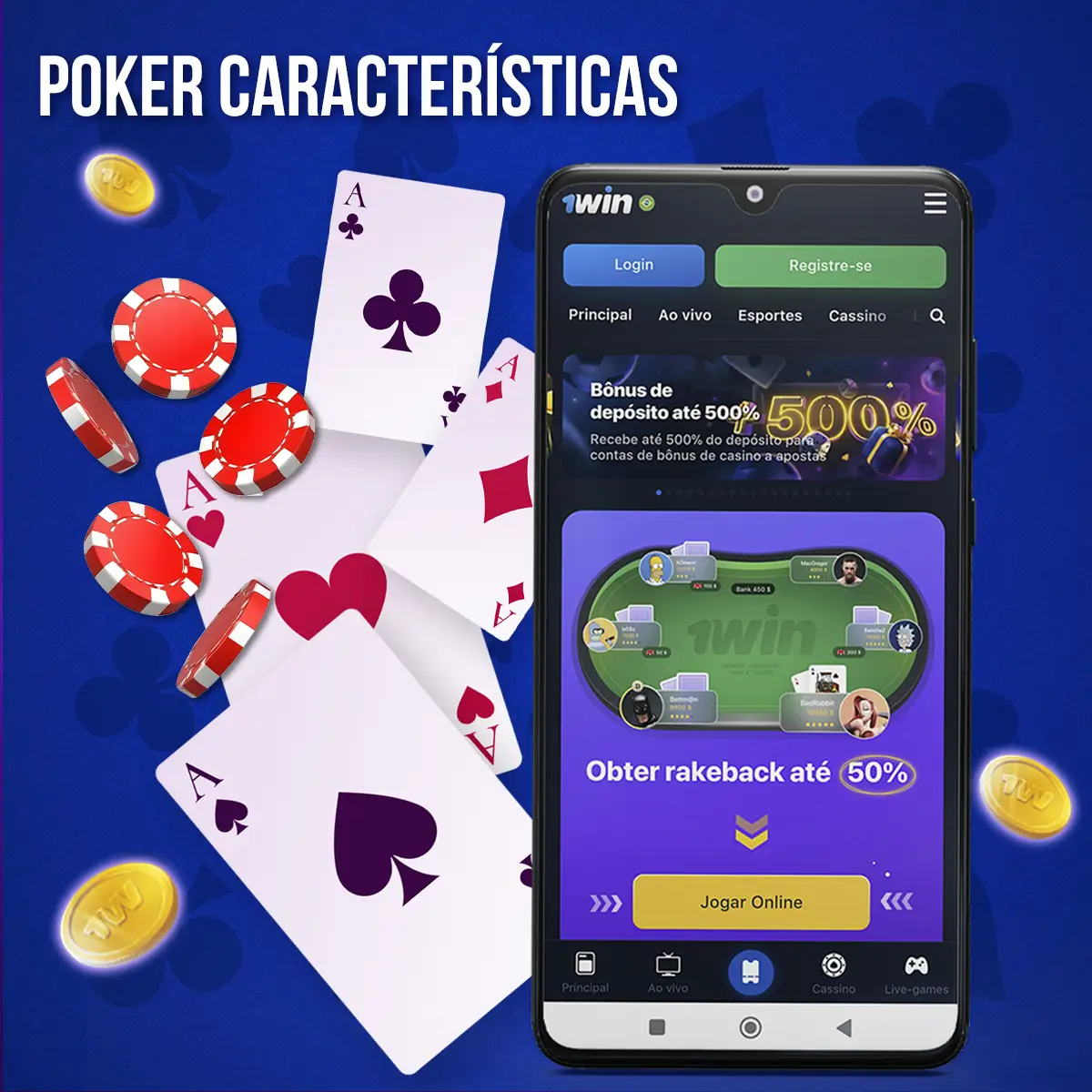
1win poker screens with cards and chips
CategoryPlayer-versus-player card game
Minimum table buy-inCheck the table buy-in and displayed currency
Playing formatsCash games, tournaments and sit & go, depending on the lobby
Poker variantsCheck Hold’em, Omaha and other variants actually listed
Promotions and eligibilityFreerolls, rakeback and campaigns depend on published conditions
Balance transfersPermitted methods enabled in the account cashier
Poker-client supplierIdentify supplier and version in the client
Interface languagesCheck Portuguese, English and other languages in the client
Player supportCheck in-app channels and hours

How a poker hand is decided

In many variants, you win when the other participants fold or when you hold the best eligible combination at showdown. Showdown is the final comparison of cards among players remaining in the hand. The list below describes traditional high-hand rankings; lowball variants may use a different order and conditions.

Traditional rankings, strongest to weakest:

  • Royal flush: ten, jack, queen, king and ace of one suit; the highest straight flush.
  • Straight flush: five consecutive cards of the same suit.
  • Four of a kind: four cards of one rank, accompanied by a fifth card.
  • Full house: three cards of one rank and two of another.
  • Flush: five cards of one suit without a consecutive sequence.
  • Straight: five consecutive ranks; if every card shares one suit, the hand belongs to the straight-flush category.
  • Three of a kind: three cards of one rank and two remaining cards of different ranks.
  • Two pair: two pairs of different ranks and a fifth card.
  • One pair: two cards of one rank with three additional cards.
  • High card: when no higher category forms, the best sequence of ranks among the five cards is compared.

Ties are resolved using the complete eligible hand. Three kings beat three jacks; when the main sets tie, kickers may decide. If the best five cards are equivalent, the pot may be split according to the rules.

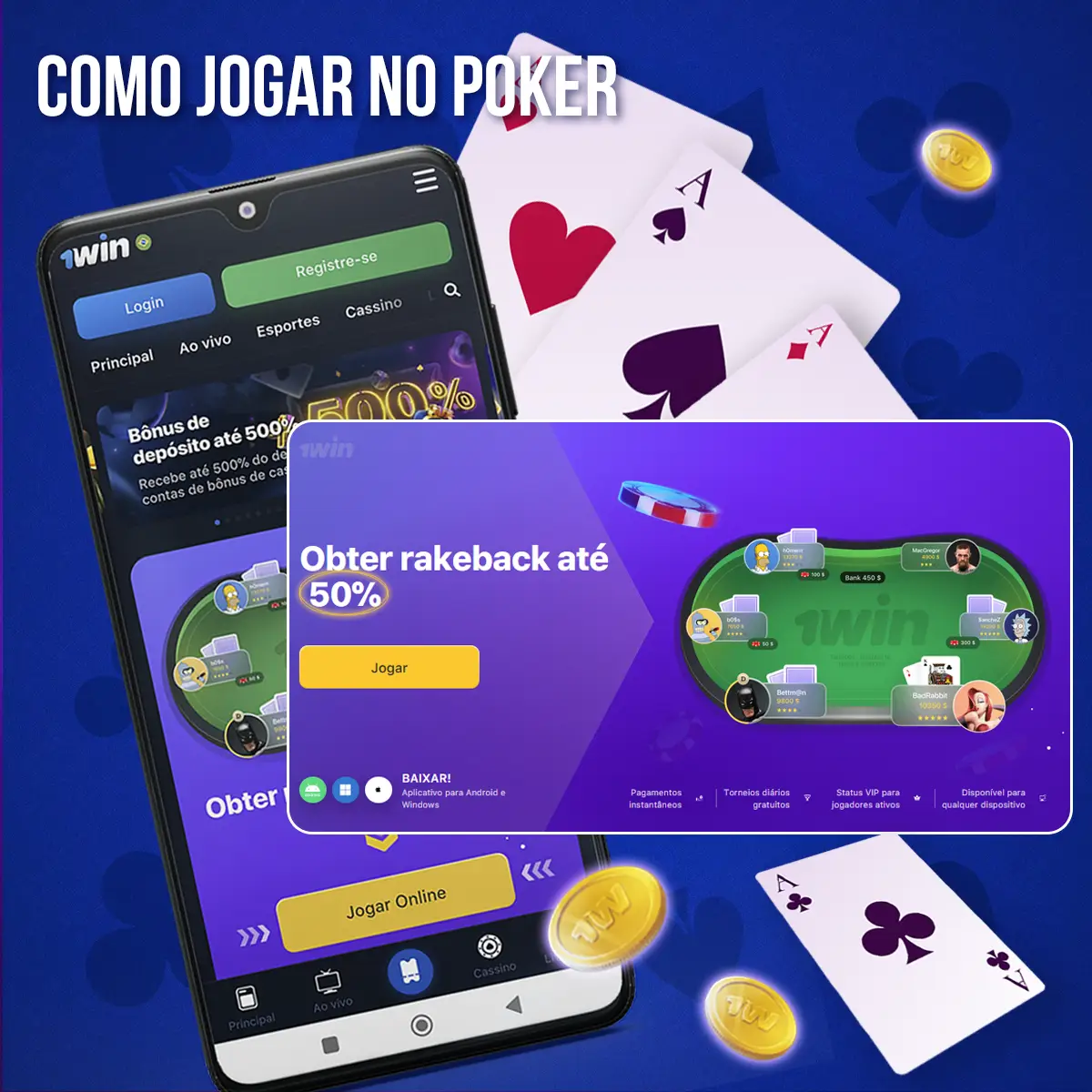
1win poker screens with cards and chips

Poker variants

The same hand ranking does not mean cards are used in the same way. Private-card count, community cards and requirements to combine particular groups distinguish variants. Confirm which variant is being played in the lobby.

Poker variants

Texas Hold’em

In Hold’em, each participant receives two private cards and shares up to five community cards. Decisions are organised into preflop, flop, turn and river. The best hand uses five of the seven available cards; depending on the combination, two, one or no private cards may be used. Also identify whether the table is no-limit, pot-limit or limit.

Omaha

In traditional four-private-card Omaha, the final hand uses exactly two private cards and exactly three community cards. This requirement changes how flushes and straights are read: holding one card of a suit is insufficient to make a flush from four community cards of that suit. Other Omaha versions exist and should be identified in the lobby.

Draw and drawing variants

In draw games, decisions include exchanging private cards, usually without community cards. Do not automatically apply high-hand rankings to every version: 2-7 Triple Draw and Badugi, for example, use their own criteria. Check the number of draws, ace value and qualifying conditions before participating.

Playing formats

Variant and format are different choices: Hold’em may appear as a cash game or tournament. The format determines what chips represent, blind progression, entry and the end of participation. Check these points in the table or event information.

  • Cash game: chips represent the table’s monetary value, with defined blinds and buy-in limits. Entry and departure follow room rules. Check minimum and maximum buy-in, currency and rake; do not confuse the big blind with the money needed to take a seat.
  • Tournament: registration provides a tournament stack and may include a separate fee. The structure defines blind levels, re-entries, registration period and prize distribution. Tournament chips are not individually withdrawn like cash-table money.
  • Sit & go: it usually starts when the required participant count is reached rather than depending only on a scheduled time. Check table size, blind speed and paid positions; the name does not define one universal structure.

Actual variety depends on the lobby and region. An event advertised as free may require an invitation, ticket or other criteria, while a guaranteed prize pool may have specific participation rules. Read the event information, not just its list title.

Tips for studying poker

Useful study combines rules, basic mathematics and decision review. Judging a play solely because it won or lost produces weak conclusions: a reasonable decision can lose a hand. Also separate playing funds from essential expenses and include fees when tracking results.

  • Learning: use rules resources and play-money tables where available. Low limits reduce money at risk but do not guarantee weak opponents or easy profit.
  • Hand selection: consider position, previous action and stack sizes. Folding is part of the game; calling merely to see a card can accumulate costs without adequate justification.
  • Position and table: acting later provides information about previous decisions but does not reveal hidden cards. Reassess hand strength as community cards arrive and participants act.
  • Control: set loss and time limits before the session. Fatigue and an urge to recover money can undermine decisions even when you know the rules well.
1win poker screens with cards and chips

How to recognise poker access steps

Before any real-money participation, confirm age eligibility, territorial eligibility and the relevant operation’s authorisation. The steps below organise account, balance and table selection; an accessible interface does not automatically establish that the service is authorised in your location.

  1. Identification: confirm domain, operator and the poker section before beginning registration.
  2. Details: use your own information and a unique password, keeping authentication codes confidential.
  3. Campaigns: check any code’s conditions; do not assume a casino offer applies to poker.
  4. Rules: read account conditions, identity-verification requirements and room policy.
  5. Confirmation: verify the displayed profile and currency before moving funds.
  6. Cashier: check ownership, the enabled method and any transfers between internal wallets.
  7. Lobby: open poker and identify the table’s variant, format and currency.
  8. Structure: check blinds, rake, seat count and entry conditions.
  9. Buy-in: review the full amount charged before confirming a seat or registration.
1win poker screens with cards and chips

Poker promotions and rakeback

A casino offer should not automatically be applied to player-versus-player poker. Poker campaigns may involve tickets, free events or partial rake returns, each with its own criteria. Availability must be confirmed for the account and relevant market.

Rakeback returns part of eligible commission, not all playing losses. For example, R$20 in eligible rake at a 10% return produces a R$2 benefit. The actual calculation depends on contribution rules, period, caps and campaign; an advertised percentage does not guarantee net profit.

Historical illustration of the 1win promotions area

Promotional codes for poker

Before considering a poker coupon, identify the exact event or campaign and read its conditions:

  1. Source: check who offers the campaign, the eligible region and validity period.
  2. Application: the promotional code page should be read alongside the terms, distinguishing poker, casino and sports.
  3. Confirmation: check whether the benefit is a ticket, credit or commission return and which conditions limit its use.
Illustrative form with a promotional code field

Poker in apps and on mobile

A poker client may be separate from the general casino interface. In the 1win app guide, check which service each version provides before installing. Compatibility, catalogue and distribution vary: a similar store name does not prove operator identity, and a version for one system does not guarantee versions for every device.

1win poker screens with cards and chips

Android version checks

On Android, identify supplier, distribution address and system requirements. Installation should begin with those checks rather than automatic acceptance of any file using the brand or poker name.

  1. Address: verify the distribution channel and developer identity on the device.
  2. Client: check that the version is actually intended for poker and supports your system.
  3. Warning: if Android reports a risk, stop and investigate. Do not ignore protection merely to complete a download.
  4. Review: check permissions, updates and the displayed account after a legitimate installation.

iOS version checks

On iOS, confirm a legitimate channel compatible with your region. An APK does not work on iPhone, and a web shortcut is not a native client. Unavailability should not be addressed by installing unknown certificates or profiles.

  1. Compatibility: check developer, requirements and the type of access offered for iPhone or iPad.
  2. Security: use only a verified distribution process and do not grant device management to unknown third parties.

Deposits and withdrawals in a poker account

The cashier is separate from hand mechanics. Check whether poker uses the platform balance or a dedicated internal wallet, and review any currency conversion. Methods cited on international pages should not be treated as automatically enabled or permitted for a Brazilian account.

Ownership, verification and withdrawal rules must be checked before transferring funds. The table identifies types of financial methods without confirming availability; current transaction limits and timing must be read at the time. Retain receipts and transaction identifiers to resolve discrepancies.

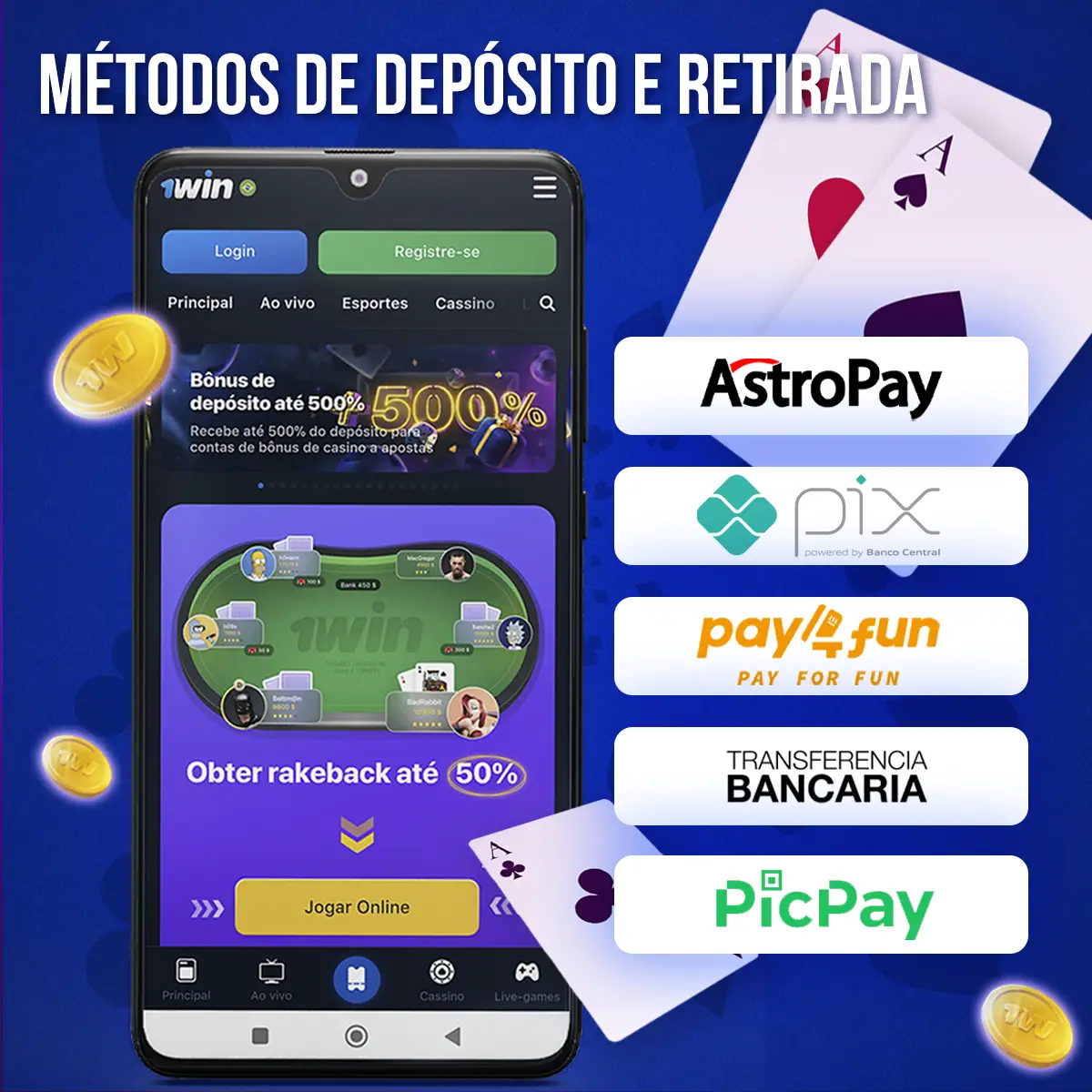
Payment methods illustration with financial brands and symbols
Payment methodHow it worksMinimum depositMaximum depositProcessing and confirmation
PixAccount-to-account transferCheck the current cashier limitCheck the current cashier limitTrack confirmation in transaction history
PicpayDigital wallet accountCheck the current cashier limitCheck the current cashier limitTrack confirmation in transaction history
Pay4FunDigital wallet accountCheck the current cashier limitCheck the current cashier limitTrack confirmation in transaction history
LotteryBank payment slipCheck the current cashier limitCheck the current cashier limitBusiness-day settlement where applicable
Bank payment slipBank payment slipCheck the current cashier limitCheck the current cashier limitBusiness-day settlement where applicable
Brazil BanksAccount-to-account transferCheck the current cashier limitCheck the current cashier limitTrack confirmation in transaction history
AstroPayDigital wallet accountCheck the current cashier limitCheck the current cashier limitTrack confirmation in transaction history
AirTMDigital wallet accountCheck the current cashier limitCheck the current cashier limitTrack confirmation in transaction history
Perfect MoneyDigital wallet accountCheck the current cashier limitCheck the current cashier limitTrack confirmation in transaction history
OpenFinanceAccount-to-account transferCheck the current cashier limitCheck the current cashier limitTrack confirmation in transaction history
Binance PayDigital asset; check restrictionsCheck the current cashier limitCheck the current cashier limitTrack confirmation in transaction history
BitcoinDigital asset; check restrictionsCheck the current cashier limitCheck the current cashier limitTrack confirmation in transaction history
Tether USDTDigital asset; check restrictionsCheck the current cashier limitCheck the current cashier limitTrack confirmation in transaction history
ETH (ERC-20)Digital asset; check restrictionsCheck the current cashier limitCheck the current cashier limitTrack confirmation in transaction history
TronDigital asset; check restrictionsCheck the current cashier limitCheck the current cashier limitTrack confirmation in transaction history
BNBDigital asset; check restrictionsCheck the current cashier limitCheck the current cashier limitTrack confirmation in transaction history
LitecoinDigital asset; check restrictionsCheck the current cashier limitCheck the current cashier limitTrack confirmation in transaction history
MoneroDigital asset; check restrictionsCheck the current cashier limitCheck the current cashier limitTrack confirmation in transaction history
DogeDigital asset; check restrictionsCheck the current cashier limitCheck the current cashier limitTrack confirmation in transaction history
Bitcoin CashDigital asset; check restrictionsCheck the current cashier limitCheck the current cashier limitTrack confirmation in transaction history
DashDigital asset; check restrictionsCheck the current cashier limitCheck the current cashier limitTrack confirmation in transaction history
ZcashDigital asset; check restrictionsCheck the current cashier limitCheck the current cashier limitTrack confirmation in transaction history
StellarDigital asset; check restrictionsCheck the current cashier limitCheck the current cashier limitTrack confirmation in transaction history
RippleDigital asset; check restrictionsCheck the current cashier limitCheck the current cashier limitTrack confirmation in transaction history
TONDigital asset; check restrictionsCheck the current cashier limitCheck the current cashier limitTrack confirmation in transaction history

Notable aspects of poker

Poker combines decisions under incomplete information, card rules and competition between participants. Study can improve decision quality, but variance, opponents’ actions and commission remain relevant. When comparing a room, assess clear rules, transparent fees, client stability and spending controls without assuming absolute security or financial returns.

When assessing the service, the following points are more useful than profit promises:

  • Events: clearly published schedules, entry, eligibility criteria and prize distribution.
  • Variety: variants and formats actually present in the lobby, with identifiable rules.
  • Limits: blinds, buy-in and commission shown in the correct currency before entry.
  • Client: compatibility, hand history and readable controls on the device being used.
  • Learning: the ability to review decisions without confusing skill with guaranteed winnings.

Frequently asked questions about poker